Fuel and Purchased Power Adjustments
Fuel and purchased power costs move far too quickly to be fixed in a rate case. An adjustment clause passes them through between cases, and the price of that convenience is a periodic review of how the utility actually bought.
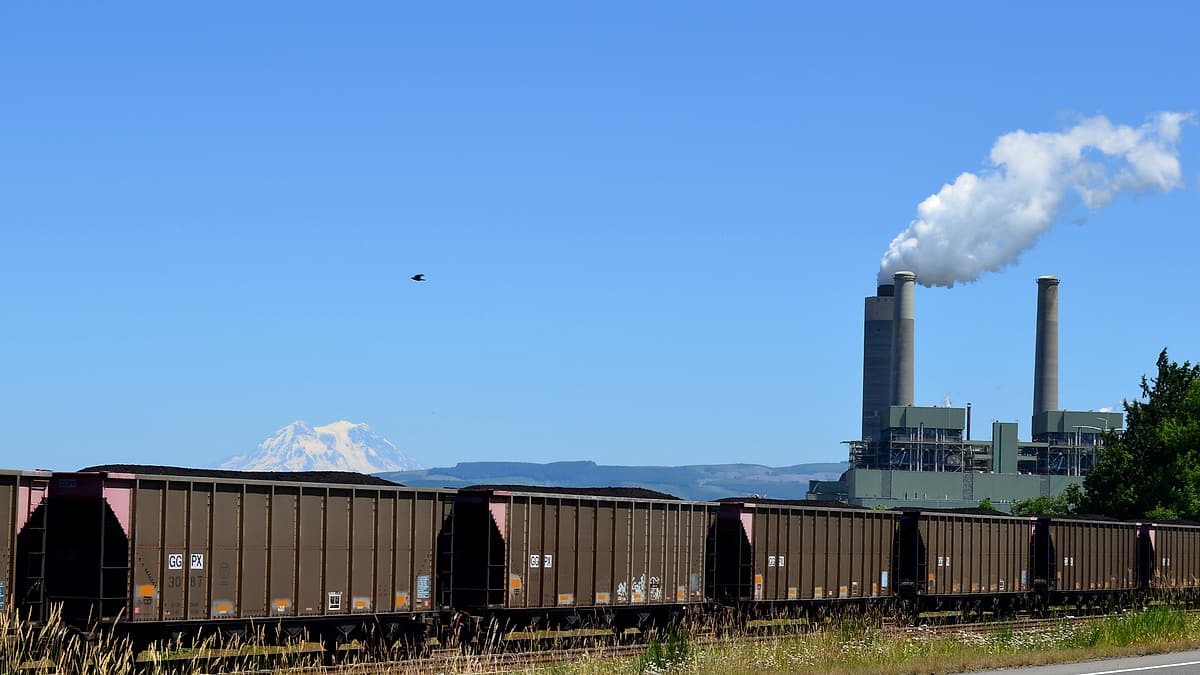
The rule in short
An adjustment clause allows a utility to change the portion of its rates attributable to fuel and purchased power without a general rate case. Recoverable costs are defined by rule and typically cover fuel consumed in the utility's own plants, the identifiable fuel component of purchased energy, and qualifying purchased economic power. Amounts collected are reconciled against amounts incurred, and the purchases are reviewed for prudence.
Fuel and purchased power are the largest costs a vertically integrated electric utility incurs and the least stable. A general rate case takes the better part of a year, and the price of natural gas can move substantially within a month. Setting a fuel charge in a rate case and leaving it fixed until the next one would guarantee that the charge is wrong almost immediately, in one direction or the other.
What an adjustment clause does
An adjustment clause is a tariff provision that changes the fuel component of rates on a stated cycle without a general proceeding. The utility computes its fuel and purchased power cost per unit for the period, compares it to the amount embedded in base rates, and bills the difference as a separate line. Where the cost is lower, the line is a credit.
The mechanism separates one volatile category from everything else in the revenue requirement. Base rates continue to recover the plant, the operating expense and the return, and remain in place until the next general case. Only the fuel component moves. That separation is what makes the clause administrable, and it is also the source of the objections raised against mechanisms of this kind generally.
Federal law recognizes automatic adjustment clauses and requires that their operation be reviewed periodically to assure that they are just and reasonable in operation. That review requirement is the statutory counterweight to the convenience the clause provides.
Which costs qualify
The rules define the recoverable pool with some precision. It covers fossil and nuclear fuel consumed in the utility's own plants and its share of jointly owned plants, together with the identifiable fossil and nuclear fuel costs associated with energy purchased from others. It also covers the total cost of purchased economic power where the utility's reserve capacity is adequate without regard to the purchase, and the energy charges on purchases where the total charges are less than the buyer's avoided variable cost.
Deductions apply. Costs recovered through sales to other systems are subtracted, so that the utility does not collect the same fuel cost twice. Where a purchase terminates and the total cost of the purchase exceeded the total avoided variable cost, a credit must be made, with interest if the credit is delayed. The conditions on purchased power are designed to keep capacity costs out of a clause intended for energy.
Every dollar billed through an adjustment clause remains subject to review, and every dollar disallowed is refunded with interest. The clause therefore changes when money moves, not whether the utility ultimately keeps it. A utility that treats the clause as a settled recovery, and does not preserve the documentation supporting each purchase, discovers the distinction during the reconciliation proceeding.
The distinction between energy and capacity does most of the definitional work. A clause is intended to track the cost of producing units of energy, which varies constantly, rather than the cost of having capacity available, which does not. Purchases that bundle the two are therefore unbundled for clause purposes, and the allocation between the components is a recurring subject of dispute in the reconciliation.
Reconciliation and the balance carried forward
Because the charge is computed on estimated or lagged data, the amount billed will not equal the amount incurred. The difference accumulates in a deferred account, and the account is trued up. An over-recovery is returned to customers through a credit in a following period; an under-recovery is collected through an additional charge. Interest is applied to the balance at a rate the tariff or the commission specifies.
The reconciliation is conducted in a proceeding of its own, typically annual, in which the utility files the underlying cost data and parties may examine it. The proceeding has two functions. It verifies the arithmetic, confirming that the amounts billed match the amounts incurred and that ineligible costs were excluded. And it provides the forum for the substantive review of how the utility procured.
| Cost | Treatment under a fuel clause | Basis |
|---|---|---|
| Fuel burned in the utility's own units | Recoverable | Directly identified in the rules |
| Fuel component of purchased energy | Recoverable where identifiable | Traced to the seller's fuel cost |
| Purchased economic power with adequate reserves | Total cost recoverable | Conditioned on reserve adequacy |
| Capacity charges on a firm purchase | Generally excluded from the clause | Capacity is a base rate item |
| Fuel recovered through sales to other systems | Deducted | Prevents double recovery |
Some jurisdictions add a sharing band around the reconciliation. Under such a design the utility absorbs a stated share of costs above a benchmark and retains a share of costs below it, which restores part of the procurement incentive the pass-through removes. The benchmark may be a market index, a forecast, or a formula, and setting it is itself a contested proceeding.
Filing frequency varies. Some tariffs adjust monthly on a rolling calculation, some quarterly, and some annually with a forecast that is trued up afterward. More frequent adjustment keeps the balance small and the bill volatile; less frequent adjustment does the reverse. The choice is a trade between carrying cost and customer bill stability, and commissions revisit it when fuel prices become unusually volatile.
Prudence review of the purchases
The substantive question in a reconciliation proceeding is whether the utility procured prudently. The inquiry examines the dispatch decisions that determined which units ran, the contracts under which fuel was bought, the hedging program if any, the management of outages that forced replacement energy purchases, and the choice between generating and buying at particular times.
The standard is the same one applied to any other utility decision: reasonableness judged on the information available when the decision was made. That formulation matters more here than almost anywhere else, because fuel prices move and every procurement decision looks wrong in retrospect from one direction or the other. A commission applying hindsight would disallow costs in every proceeding regardless of the quality of the decisions.
What the utility must therefore produce is contemporaneous documentation: the analysis supporting a contract, the dispatch logs, the hedging policy and the decisions taken under it, and the record of alternatives considered. Where that documentation is thin, commissions have disallowed costs not because the purchase was shown to be unreasonable but because the utility failed to carry its burden of showing it was reasonable.
Mechanisms of this kind sit alongside the other single-issue devices described in riders and trackers outside a rate case, and they interact with the choice of measurement period discussed in the test year and adjustments to it, since a cost removed to a clause is removed from base rates. A disallowance ordered in a reconciliation proceeding is subject to the process described in rehearing an order, and appealing it.
Points to carry away
- An adjustment clause changes the fuel component of rates between general cases, without reopening the revenue requirement.
- Recoverable costs are defined by rule and exclude amounts recovered through sales to other systems.
- Purchased economic power is recoverable where reserve capacity is adequate independent of the purchase, or where energy charges fall below the buyer's avoided variable cost.
- Amounts billed are reconciled against amounts incurred, with the difference carried forward as an over or under recovery, usually with interest.
- Recovery through the clause does not waive prudence review; a purchase found imprudent is disallowed after the fact.
Questions readers ask
Does hedging cost qualify for recovery?
Generally yes, where the hedging program was prudently designed and executed, on the reasoning that hedges are a cost of procuring fuel rather than a speculative activity. The recurring dispute is not eligibility but hindsight: a hedge that locked in a price above the market appears expensive afterward and was reasonable when placed. Commissions that review hedging assess the program as a whole and the decision rules it followed, rather than the outcome of individual positions.
Why is the clause reviewed if the costs are simply passed through?
Because pass-through removes the incentive that ordinarily disciplines a purchase. A utility recovering fuel dollar for dollar is indifferent to the price it pays in a way it is not indifferent to costs it must absorb between rate cases. Periodic prudence review substitutes an external check for the missing internal one. Some jurisdictions add a sharing mechanism under which the utility retains a portion of savings and bears a portion of overruns, restoring part of the incentive directly.
What happens to an over-recovered balance?
It is returned to customers, ordinarily as a credit applied through the same clause over a following period, with interest at the rate the tariff or the commission specifies. Under-recoveries are collected the same way. Because the balance is trued up rather than forgiven, a clause does not change how much the utility ultimately receives for fuel; it changes when. Disputes therefore concentrate on the interest rate applied and on the length of the recovery period.
Sources
- 18 C.F.R. § 35.14 — Fuel cost and purchased economic power adjustment clauses (Cornell LII)Defines the recoverable fuel and purchased power costs, the conditions on purchases and the credit provisions.
- 16 U.S.C. § 824d — Rates and charges; automatic adjustment clauses (Cornell LII)Addresses automatic adjustment clauses and requires periodic review of their operation.
- 16 U.S.C. § 824e — Power of Commission to fix rates and charges (Cornell LII)Supplies the authority to change a rate found unjust and sets the refund effective date rules.
- Ohio Revised Code § 4909.15 — Fixation of reasonable rateFrames the reasonable rate determination against which recovered fuel cost is measured.
- Ohio Revised Code § 4905.13 — System of accounts for public utilitiesAuthorizes the accounts through which fuel cost and recovery balances are tracked.
- 18 C.F.R. § 35.13 — Filing of changes in rate schedules (Cornell LII)Requires the cost and energy data used to test the operation of an adjustment clause.
Pinnacle Law Review is a publication, not a law firm. This article states general rules and cites its sources; it is not advice about any particular case, and the law differs by state and changes over time.
More in Utility Ratemaking
What Enters the Rate Base
Rate base is the net investment on which a utility is permitted to earn a return. Plant enters it when it is used and useful in rendering service, valued at original cost less accumulated depreciation, adjusted for working capital and reduced by deferred taxes and customer-supplied capital. Investment is also tested for prudence, judged on the information available when the commitment was made.

Designing the Rate Once the Revenue Is Set
Once a commission has fixed each class's revenue responsibility, rate design determines the structure through which that revenue is collected. The components are a fixed customer charge, energy charges that may be flat or blocked, demand charges applied to larger customers, and time-varying or seasonal differentials. Federal law requires state commissions to consider a defined set of ratemaking standards.
Rehearing an Order, and Appealing It
Statutes governing utility commissions and their federal counterpart require a party to apply for rehearing before seeking judicial review. The application must be filed within a short period, commonly thirty days, and must specify each ground of error with particularity. A ground not raised is generally waived. On review, the commission's findings of fact are conclusive if supported by substantial evidence, and the order is reversed only if unlawful or unreasonable.