What Enters the Rate Base
An investment earns a return only if it passes two independent tests. It must have been prudently incurred when the decision was made, and it must be used and useful in providing service to the customers who are being charged for it.
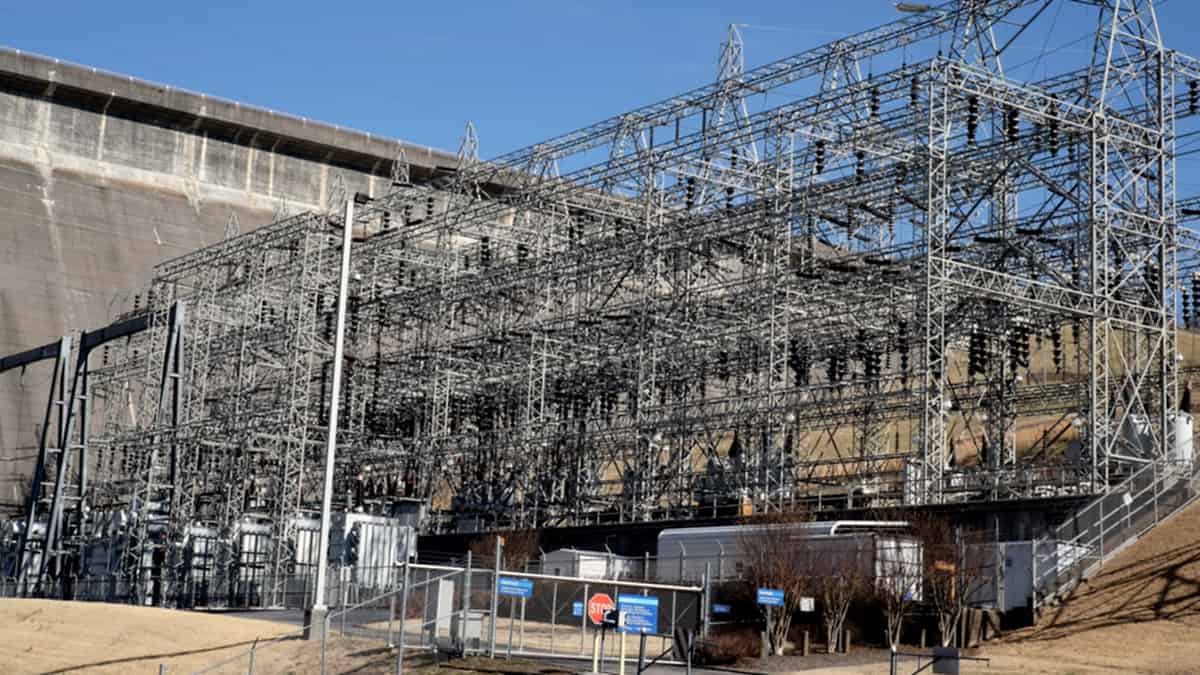
The rule in short
Rate base is the net investment on which a utility is permitted to earn a return. Plant enters it when it is used and useful in rendering service, valued at original cost less accumulated depreciation, adjusted for working capital and reduced by deferred taxes and customer-supplied capital. Investment is also tested for prudence, judged on the information available when the commitment was made.
Rate base is the net investment on which a utility is permitted to earn a return. Because the return component of the revenue requirement is the rate base multiplied by the allowed rate of return, every dollar admitted to rate base produces an annual charge to customers for as long as the asset remains in service. That is why admission is tested rather than assumed.
The two tests an investment must pass
The first test is prudence. It asks whether the decision to make the investment was reasonable in light of the information available to management at the time the commitment was made. The standard is deliberately backward-looking as to information and forward-looking as to outcome: a decision that was reasonable when made does not become imprudent because circumstances changed. Where a commission raises a prudence question, the utility carries the burden of demonstrating the basis for the decision.
The second test is used and useful. Statutes direct the commission to determine the valuation of property that is used and useful in rendering the regulated service. This test operates in the present rather than at the moment of decision. A prudently built plant that is not serving customers fails it, and a plant serving customers passes it whether or not its construction was well managed. The two tests are independent, and an investment must satisfy both.
The interaction produces the hardest cases. A generating station begun reasonably, built over-budget, and completed into a market that no longer needs it may be prudent in inception, imprudent in execution, and only partly used and useful on completion. Commissions resolve such cases by segmenting: allowing the portion attributable to reasonable decisions and to capacity actually needed, and disallowing the remainder.
How the figure is computed
The starting point is original cost, meaning the cost to the first entity that devoted the property to public service, rather than replacement cost or market value. Accumulated depreciation is subtracted, leaving net plant. To that are added the working capital allowances the statutes direct: a reasonable allowance for materials and supplies and a reasonable allowance for cash working capital, the latter usually supported by a study of the interval between paying costs and collecting revenue.
Several deductions follow. Accumulated deferred income taxes represent tax collected in rates but not yet remitted, so the balance is capital supplied by customers rather than by investors and is removed. Contributions in aid of construction and customer advances are deducted for the same reason. Plant held for future use is included or excluded depending on how definite the future use is, and property no longer used in the regulated business is removed entirely.
When a utility acquires an existing system, the purchase price frequently exceeds the seller's depreciated original cost. The excess, sometimes called acquisition adjustment, is not automatically admitted to rate base. Most commissions require an affirmative showing that the acquisition produced benefits to customers commensurate with the premium, and many disallow the premium entirely. Customers do not fund a transaction merely because it occurred.
Plant that is not yet in service
Long construction projects raise a timing problem. The utility is spending money and paying for the capital that funds it, but the plant is not yet serving anyone and so is not yet used and useful. Two mechanisms address this. The first capitalizes an allowance for funds used during construction, adding a computed financing cost to the recorded cost of the plant, which enters rate base when the plant does. Customers pay nothing during construction and pay a larger amount afterward.
The second includes construction work in progress in rate base directly, so that customers pay a return during construction. Where that is done, the corresponding allowance must be discontinued, and accounting procedures must ensure that customers are not charged for both a capitalized allowance and the same amounts included in rate base. The two mechanisms are alternatives, and double recovery is the specific abuse the rules guard against.
Which mechanism a commission chooses is a policy question about intergenerational fairness and about the utility's financial condition during a large build. Direct inclusion supports credit metrics and lowers total cost over the asset's life. Capitalization defers the charge to the customers who will actually receive the service. Neither approach is required, and jurisdictions differ.
| Item | Treatment | Effect on customers |
|---|---|---|
| Completed plant in service | Original cost less accumulated depreciation, in rate base | Return plus depreciation each year |
| Construction work in progress with the allowance | Financing cost capitalized into plant cost | Nothing now, a larger base later |
| Construction work in progress in rate base | Included directly, allowance discontinued | Return during construction, smaller base later |
| Excess capacity | Portion excluded as not used and useful | No return on the excluded portion |
| Canceled project | Recovery of cost, of a return, or of neither | Depends entirely on state law and the order |
Regulatory assets sit alongside physical plant and are treated similarly. Where a commission has authorized a utility to defer a cost for later recovery, the deferred balance is an asset created by the order rather than by construction. Whether it earns a return while it is being amortized is decided in the order that created it, and silence on the point is a recurring source of later dispute.
Canceled and abandoned plant
The hardest category is a project abandoned before completion. It was never used and useful, so it cannot enter rate base under that test, yet the money was spent and may have been spent prudently. States have taken different positions. Some permit recovery of the prudently incurred cost without a return, amortized over a period. Some permit recovery with a return. Some deny recovery entirely and leave the loss with shareholders.
The constitutional boundary is looser than utilities often argue. A state law denying recovery of costs for a canceled plant does not by itself effect an unconstitutional taking, because the Constitution leaves states free within broad limits to decide what ratesetting methodology best meets their needs, and the question is whether the overall rate order remains within the zone of reasonableness. What matters is the impact of the order rather than the theory behind any single component.
That framing runs through the entire field. It is why a commission may combine elements of different methods, and why a challenge to one disallowance rarely succeeds without showing that the total result is confiscatory. The return applied to whatever survives these tests is the subject of the allowed return on equity, the period against which the balances are measured is described in the test year and adjustments to it, and the assembled total is put together in the revenue requirement and how it is built.
Points to carry away
- A commission determines the valuation of property that is used and useful in rendering the regulated service.
- Prudence is judged on what the utility knew at the time of the commitment, not on how the investment performed.
- Construction work in progress may be capitalized with an allowance for funds used during construction, or included in rate base with the allowance discontinued.
- Accumulated deferred income taxes and customer advances are deducted because they represent capital the investors did not supply.
- No single ratemaking methodology is constitutionally required, and exclusion of a failed investment does not by itself amount to a taking.
Questions readers ask
What is an excess capacity disallowance?
It removes from rate base the portion of a plant that exceeds what is needed to serve load reliably. The theory is that customers should pay a return only on capacity that serves them, so a facility built for demand that never materialized is used and useful only in part. Commissions apply it by comparing installed capacity against peak demand plus a reserve margin, and disallowing the excess. Disputes turn on the appropriate reserve margin and on whether the forecast that justified the build was reasonable when made.
Does a utility earn a return on donated or contributed property?
No. Property funded by customer advances, contributions in aid of construction, or government grants was not paid for with investor capital, so allowing a return on it would compensate investors for money they did not supply. Such contributions are deducted from rate base or recorded as an offset to plant. The utility may still recover the cost of operating and maintaining the property, and depreciation treatment varies by jurisdiction depending on whether the contribution was taxable to the utility.
Can plant be removed from rate base after it has been included?
Yes, and it happens routinely as plant retires and is written off against accumulated depreciation. Removal for cause is different and less common. A commission may exclude previously included plant that has ceased to be used and useful, such as a generating unit that has been retired early or a facility taken out of service. Whether the undepreciated balance is recovered, and whether a return is allowed on it during recovery, are separate questions decided case by case.
Sources
- Ohio Revised Code § 4909.15 — Fixation of reasonable rateRequires valuation of property used and useful as of a date certain, with stated allowances.
- Duquesne Light Co. v. Barasch, 488 U.S. 299 (Cornell LII)Holds that states may choose a ratesetting methodology and that excluding canceled plant is not automatically a taking.
- FPC v. Hope Natural Gas Co., 320 U.S. 591 (Cornell LII)Establishes that the impact of the rate order rather than the formula employed is controlling.
- 18 C.F.R. § 35.25 — Construction work in progress (Cornell LII)Permits inclusion of construction work in progress and bars simultaneous capitalization of the allowance.
- Ohio Revised Code § 4909.18 — Application to establish or change rateRequires the report of property used and useful that supports the claimed rate base.
- Ohio Revised Code § 4905.13 — System of accounts for public utilitiesAuthorizes the prescribed plant accounting from which original cost figures are drawn.
Pinnacle Law Review is a publication, not a law firm. This article states general rules and cites its sources; it is not advice about any particular case, and the law differs by state and changes over time.
More in Utility Ratemaking

Designing the Rate Once the Revenue Is Set
Once a commission has fixed each class's revenue responsibility, rate design determines the structure through which that revenue is collected. The components are a fixed customer charge, energy charges that may be flat or blocked, demand charges applied to larger customers, and time-varying or seasonal differentials. Federal law requires state commissions to consider a defined set of ratemaking standards.
Fuel and Purchased Power Adjustments
An adjustment clause allows a utility to change the portion of its rates attributable to fuel and purchased power without a general rate case. Recoverable costs are defined by rule and typically cover fuel consumed in the utility's own plants, the identifiable fuel component of purchased energy, and qualifying purchased economic power. Amounts collected are reconciled against amounts incurred, and the purchases are reviewed for prudence.
Rehearing an Order, and Appealing It
Statutes governing utility commissions and their federal counterpart require a party to apply for rehearing before seeking judicial review. The application must be filed within a short period, commonly thirty days, and must specify each ground of error with particularity. A ground not raised is generally waived. On review, the commission's findings of fact are conclusive if supported by substantial evidence, and the order is reversed only if unlawful or unreasonable.