The rate case and who takes part in it, the revenue requirement and the rate base it is built on, the allowed return on equity, the test year, cost allocation between customer classes, fuel and purchased power adjustments that move outside a rate case, riders and trackers, and challenging an order on rehearing and appeal.
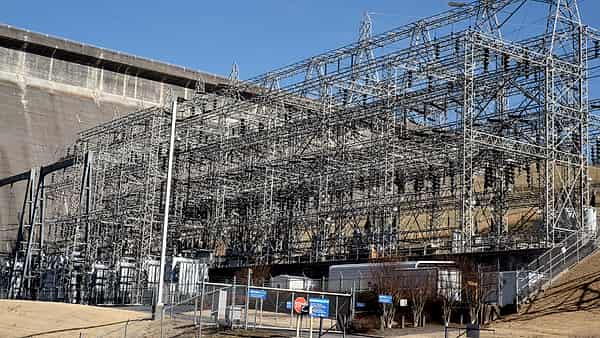
Rate base is the net investment on which a utility is permitted to earn a return. Plant enters it when it is used and useful in rendering service, valued at original cost less accumulated depreciation, adjusted for working capital and reduced by deferred taxes and customer-supplied capital. Investment is also tested for prudence, judged on the information available when the commitment was made.
Once a commission has fixed each class's revenue responsibility, rate design determines the structure through which that revenue is collected. The components are a fixed customer charge, energy charges that may be flat or blocked, demand charges applied to larger customers, and time-varying or seasonal differentials. Federal law requires state commissions to consider a defined set of ratemaking standards.
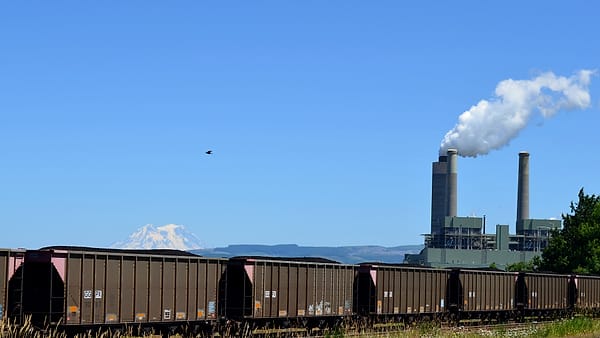
An adjustment clause allows a utility to change the portion of its rates attributable to fuel and purchased power without a general rate case. Recoverable costs are defined by rule and typically cover fuel consumed in the utility's own plants, the identifiable fuel component of purchased energy, and qualifying purchased economic power. Amounts collected are reconciled against amounts incurred, and the purchases are reviewed for prudence.
Statutes governing utility commissions and their federal counterpart require a party to apply for rehearing before seeking judicial review. The application must be filed within a short period, commonly thirty days, and must specify each ground of error with particularity. A ground not raised is generally waived. On review, the commission's findings of fact are conclusive if supported by substantial evidence, and the order is reversed only if unlawful or unreasonable.
A rate case is built on a test year, a twelve-month period whose revenues, expenses and rate base are used to compute the revenue requirement. Jurisdictions use a historic year, a historic year updated to a later date, or a forecast year. Because no actual period is representative, the raw figures are adjusted, and the traditional limit is that a change must be known and measurable.
Parties to a rate proceeding may submit an offer of settlement at any time, and most general cases resolve that way. A commission must still find the result just and reasonable and in the public interest, and the record must support the finding. Settlements often state a total revenue change without allocating it among the components, which is why they are called black-box agreements. Contested settlements may be approved only where the record permits resolution of the disputed issues.
A commission determining just and reasonable rates computes the revenue the utility must be permitted to collect. The formula adds prudently incurred operating expenses, an annual depreciation allowance, taxes, and a return calculated by multiplying the rate base by an allowed rate of return. Each component is tested separately, and nearly every contested issue in a rate case attaches to one of the four.
A regulated utility seeking to change its rates files an application containing the existing schedule, the proposed schedule, a statement of the property claimed to be used and useful, an operating statement and supporting testimony. The commission sets a schedule, publishes notice and rules on interventions. The applicant carries the burden of proving that the proposed rates are just and reasonable.
A cost of service study divides the revenue requirement among customer classes in three steps. Costs are functionalized into production, transmission, distribution and customer categories; classified as demand-related, energy-related or customer-related; and allocated to classes using factors that reflect each class's contribution to the cost driver. Commissions then temper the indicated movement through gradualism.
A utility is entitled to a return on the value of the property it employs for the public that is commensurate with returns on investments in other enterprises having corresponding risks, and sufficient to maintain its financial integrity and attract capital. Witnesses estimate that return with discounted cash flow, risk premium and capital asset pricing models applied to a group of comparable companies. The models produce ranges rather than points, and the commission selects within the range.
Riders and trackers permit a utility to recover a defined category of cost through a separate charge adjusted between general rate cases. The recurring objection is single-issue ratemaking: examining one cost without examining the revenues and cost reductions that would offset it can allow a utility to earn above its authorized return while rates rise. Commissions that permit such mechanisms typically attach conditions, including caps, reconciliation, earnings tests and periodic prudence review.